In May of 2025, after several discussions with my primary care physician, I opted to have preventative surgery to fix two umbilical hernias. I made this decision for 3 reasons:
- Hernias only get worse, not better. It’s better to fix them sooner than later.
- I am in pretty good shape for my age, so post-surgery recovery now will definitely be easier than in, say, 10 years.
- I could afford health insurance in Colombia, and I had it at that moment. I wasn’t sure that I’d have access to health insurance in the future, as I moved around as a digital nomad.
Turns out that it was a wise move on my part. First, some background.
My Health Insurance Coverage in Colombia
In 2023, I researched health insurance, primarily for sake of applying for Colombia’s Digital Nomad Visa, but also because I needed health insurance anyway. You see, even though I am an active and healthy person, the ravages of Time are slowly manifesting… and I’ll need more and more healthcare.
Buying the Insurance
I hunted around for weeks on social media, and I found Angela Berrio, a hotshot bilingual insurance salesperson based in Medellin. After multiple low-pressure discussions with her, she sold me SURA’s Evoluciona Familiar plan. I paid a little less than 6,271,675 COP (in bi-annual installments), about $1,608 as of the day I published this article. I say “a little less” because back when I first purchased the policy, the price was lower, and now it is slightly higher due to Colombia’s mandatory annual inflation.
Later it turned out that – despite what Angela told me – Colombia Migración said that my health insurance policy didn’t qualify for the Digital Nomad Visa 😒 But that’s a different story for a later time. The point is that my insurance was – and still is – great! Let me tell you something! 👇🏽😃
Using the Insurance
In addition to the full medical coverage, it covers basic dental procedures like cleaning. With my SURA insurance, I can get FULL preventative checkups. When I started doing this, it uncovered a few minor health issues, and I started working towards resolving them early. One of them required an MRI, and another required an Echocardiogram. Besides the Specialist Copay (about 40,000 COP, which is more than the regular copay of about 23,000 COP), I didn’t pay a single additional peso for these procedures.
My insurance doesn’t cover prescriptions, but in Colombia almost all medicines are available over the counter, so that was – and still is – a non-issue for me.
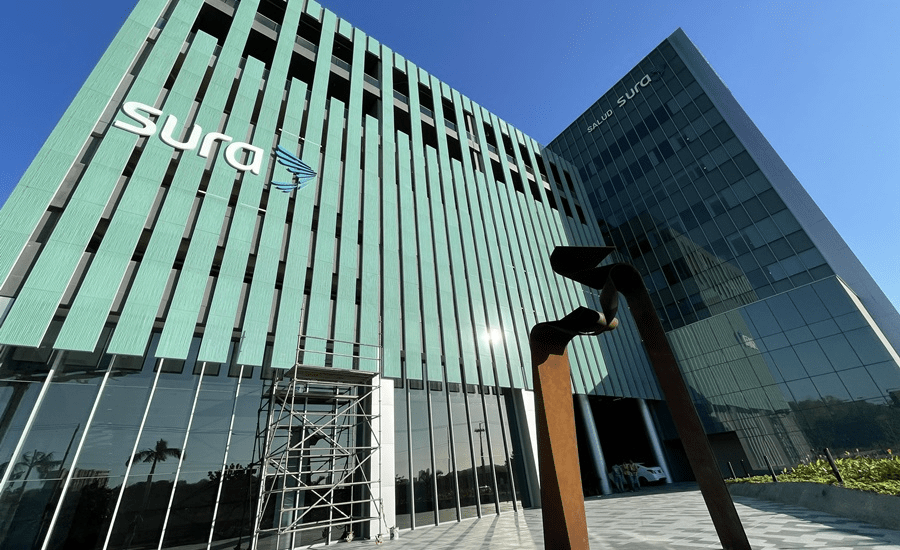
The SURA facilities are clean, spacious, and seemingly well-managed (at least at a higher level). I even found a doctor in Barranquilla who spoke some English. I got the feeling that the Powers That Be invested some time and effort into the private healthcare sector of Colombia, because the quality of equipment and the doctors’ qualifications/skills are unprecedented, especially for a “developing nation”.
The real superstar, the tool that I feel brings so much EFFICIENCY to my interactions with my healthcare provider and the medical centers… is their mobile app. I can use the SURA mobile app on my Android phone to handle almost everything about my health. Manage Appointments (both in-person and virtual appointments), view my test results, read healthy lifestyle guides, and more! It really is a great app: well-designed, highly functional, never crashes… this makes me wonder why, say, Bancolombia doesn’t hire THAT team to rewrite the buggy and barely functional Bancolombia mobile app!
That’s my impression of private healthcare in Colombia. By the way, can you imagine how much these visits and treatments would have cost in the United States? Actually, you don’t even have to imagine. Like a vast number of Americans, I avoided going to the hospital… even if it meant literally dying. You already know. You KNOW 😑
Pre-Surgery
Alright, back to the recent past. I didn’t know that before I could schedule my surgery date, I needed more than just the surgeon’s order – I had to get a total of THREE authorizations:
- Doctor/Surgeon Authorization
- Insurance Provider Authorization
- Clinic/Facility and Anesthesiologist Authorization
I only found this out when I started trying to make the surgery appointment date with the surgeon’s secretary (who was somewhat rude, I might add).
Getting these authorizations were a little challenging. I called the appropriate phone number, but I couldn’t quite understand what the process. They couldn’t speak clearer Spanish, and they didn’t have anyone who spoke any English. However, they said they sent me the authorizations via email. I looked in my inbox, but I didn’t read each one carefully. They all had the same title, but I figured that’s how it was supposed to be.
I forwarded the documents to the surgeon’s secretary and waited for a response. A few days later she responded saying that I didn’t have all the necessary documents. It turns out that SURA had accidentally sent me THREE copies of the same authorization (so I was missing two). This clerical error actually cost me time, because the surgeon’s secretary had to push my surgery date out by a couple of weeks.
I decided to once again hire my bilingual Costeña helper Katherine, to get on a 3-way call and sort this out. With her help, SURA finally sent me all 3 correct authorizations. I had to contact the anesthesiologist separately to answer some of his questions, I forwarded the responses to the surgeon’s secretary, and I finally had date for my procedure.
Surgery Day
A good and trustworthy acquaintance agreed to accompany me to the procedure and stay with me for a few nights afterwards. I knew I’d have to compensate her, of course, because nothing in Colombia is free for foreigners! 💰 😅
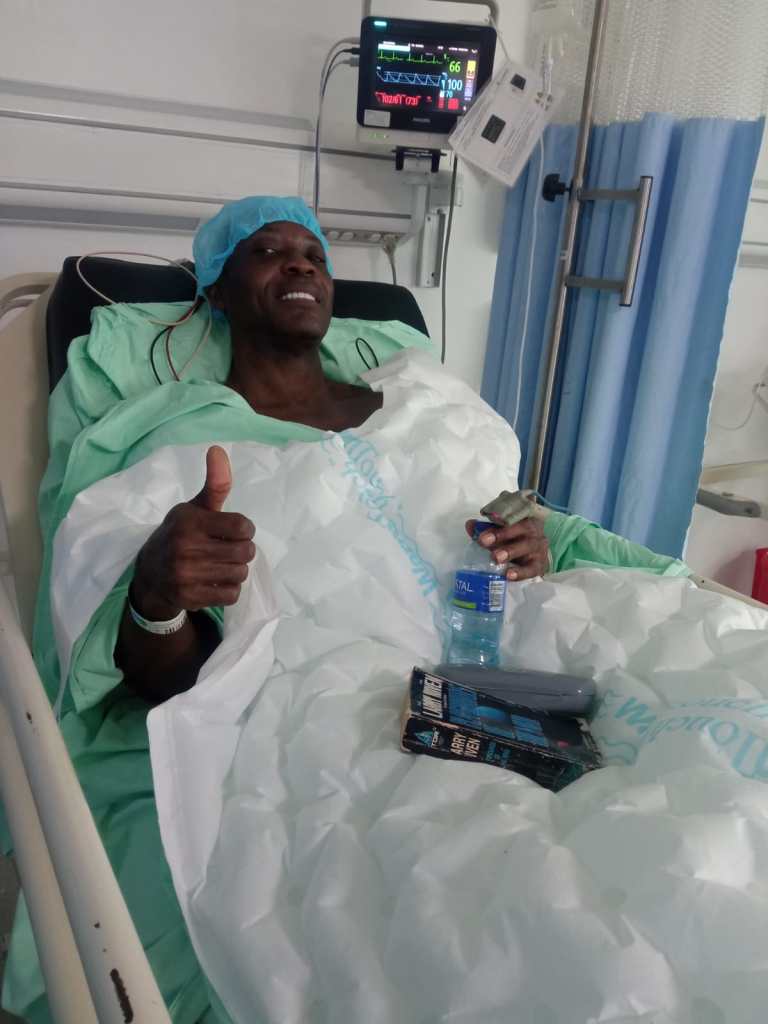
On June 25th, 2025, we got there at 6AM as instructed, but I didn’t get admitted until about 9AM. “Colombian Time”, right? Haha! However, once I was admitted and they started the prepping, it was speedy process. They wheeled me to the surgery room and applied the general anesthetic to knock me out. I have vague memories of them cutting me… I could feel slight pressure (no pain) and I could hear the surgeon and the nurse talking.
You know, I feel like I should be freaked out about having this memory, but oddly… I feel nothing 🤷🏽♀️
The operation itself took about an hour, and it was a success… but I was to stay there until I hit other physical benchmarks – be able to stand, walk, speak clearly, urinate normally, etc.
Post-Surgery Complications
This is where things got a bit complicated. You see, while I was sitting in bed recovering and waiting to be discharged, the head nurse (I think that’s what she was) came over and told me that they couldn’t discharge me until I urinated at least once. I understood… then she just walked away without asking me if I was thirsty or anything 🤔 I had to call for the orderly THREE TIMES to bring me bottles of water to drink, which he eventually did.
15 minutes later, I still didn’t have the urge to urinate, but I wanted to be discharged, so I ask the orderly to take me to the bathroom. I tried to urinate standing up, but it didn’t work. The orderly suggested that I try from a sitting position. So, I carefully sat on the toilet seat.
And that, ladies and gentlemen, is where I fucked up.

You see, due to their very nature, hospital wards often contain much higher levels of alien/harmful pathogens than non-hospitals. Especially the toilet seats. In my post-surgery mind-fog, I forgot about this fact, and I DID NOT STERILIZE THE SEATS BEFOREHAND.
I strongly believe that THAT moment was the beginning of my horror story.
A little while after I used the bathroom, they discharged me, with a prescription for Acetaminophen + Codeine, minimal printed instructions, and some verbal instructions (including the tentative surgeon follow-up date) given to my friend who accompanied me. They definitely were not as thorough as I expected – they didn’t even try to talk to me directly or via a translator/interpreter, even though I saw that 1 nurse and 1 orderly spoke English – but hey… different country, different culture, different standards, different work ethic, I’m black in a deeply classist and colorist country, etc. It is what it is. Welcome to Colombia.
Infection From Hell
Fast forward a few days later, I was home recovering, mostly in bed. I was following all the recovery guidelines. One morning (the day after my helper had left, I think) I woke up and noticed a weird, peeling, white skin rash on my butt (the parts that make contact with toilet seats), and small, hard, subcutaneous (“headless”) boils on random parts of my body… including one on my scrotum 😯 I had never had these on my body before! I didn’t panic, but I immediately showered thoroughly as usual, applied the little antifungal ointment I had lying around, and didn’t think too much about the problem. They bothered me, to be sure, but I figured the hot compress bag and more pain meds would help.
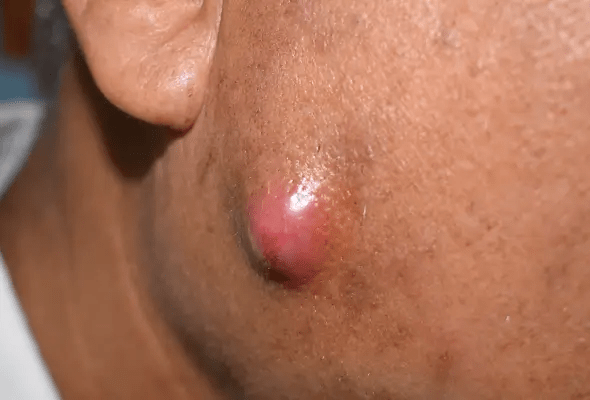
Nope. The boils got worse. On a daily basis. Fast forward 5 more days… and several of them had gotten quite big… and they were still “headless” (so squeezing did nothing). The one on my scrotum had gotten especially huge, due to all the soft tissue and plentiful blood supply. I called him BOB (“Big ‘Ol Boil”) 😆 I was in regular, distracting pain 😖 and I also started developing a fever… which was all reason I needed to go see my urologist (a few days later, because he wasn’t available right away).
To make a long story short, he immediately diagnosed it as a Staph Areus infection (deadly if not treated right away), and it was most likely due to my time in the hospital – surgery, weakened immune system, and contact with unsterilized surfaces – a perfect storm of factors and pathogenes.
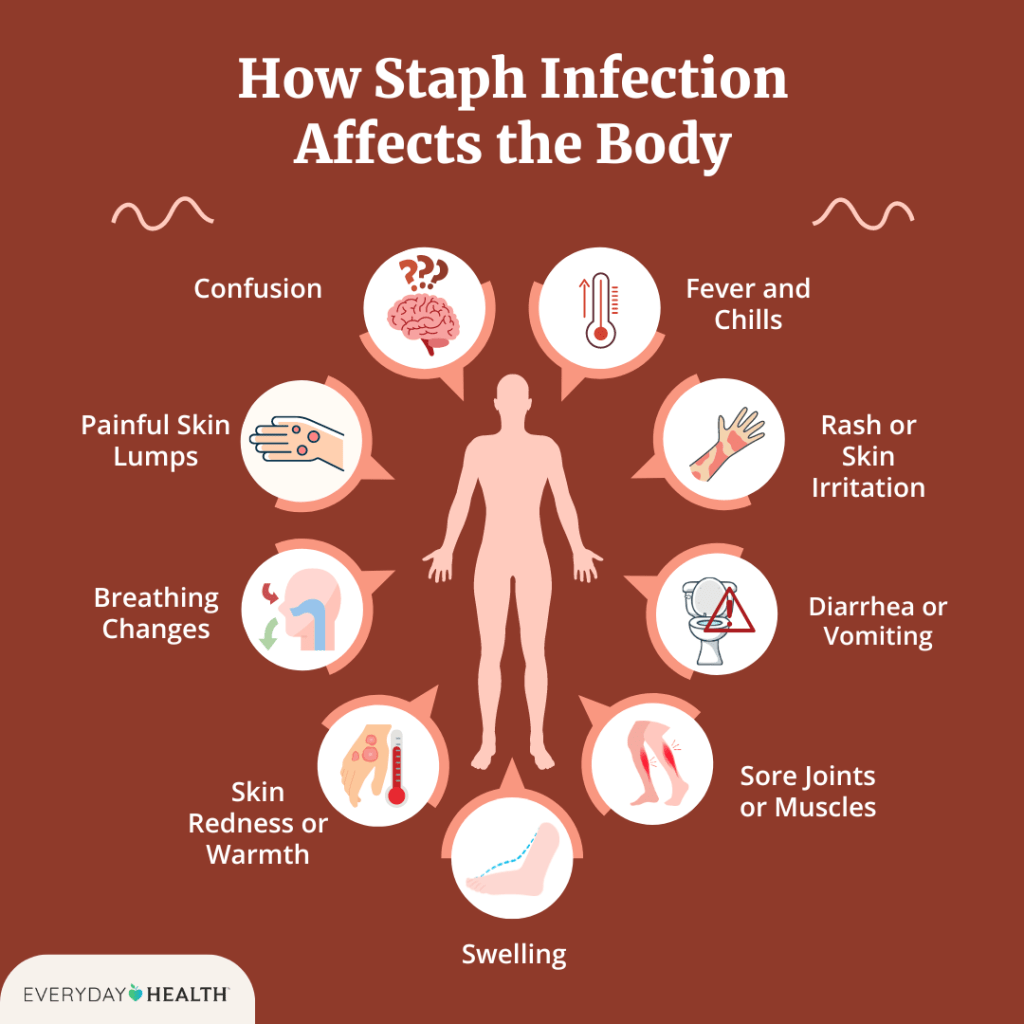
The urologist prescribed me 3 oral and 3 injectable powerful antibiotics and told me to come back in a week.
Injections From Hell
From his office, I limped to the recommended Habib Pharmacy to buy all the drugs and get the first injection. Turns out that intramuscular antibiotic injections are EXTREMELY painful. It also turns out that the nurses/staff at HABIB have little or no Human Empathy. Why do I say this? Because when the nurse in the “injection room” administered the injections, I was in a LOT of pain. I legitimately thought that she had hit the sciatic nerve!

I could barely walk out of her office, and I had to sit on a chair next to the entrance, hunched over and writhing in OBVIOUS PAIN. I was there for at least 15 minutes, and yet not one of the staff stopped next to me to check on me or ask if I needed anything at all (water, call a taxi, something, ANYTHING). Nope, they just glanced at me (they even made eye contact), then kept on with their chatting, texting, doom-scrolling on social media, or walking from one corner to the other pretending to work. Not a word 😞
I guess they assumed I have no feelings? This is yet another example of how non-wealthy black men live life on “High Difficulty Mode”, ESPECIALLY in situations where we have to submit to healthcare providers. (Oh and I know there’ll be at least ONE reader who’s gonna say, “Oh you’re just looking for racism, so you will find it”. Bitch, it’s all around us, but it doesn’t affect YOU. To wit: my demographic has to navigate the world in a way that you probably will never understand, so miss me with that fucking gaslighting shit, False Equivalencies, or Straw Man arguments that your mind is about to conjure 😠)
However, another CUSTOMER, an elderly lady (of course), stopped and checked on me. She showed me lots of human empathy, asked if I needed water, and told me to be strong for a few more minutes. May God bless and protect that abuela 🤗
I had a few more days of daily injections to go. It wasn’t practical to visit HABIB Pharmacy every day, so I checked Farmatodo (no-go), asked around, and finally hired a qualified nurse who could visit me daily to administer the injections and clean/dress my surgery wound.
Healing From Everything
Slowly, over the course of about 10 days, the rash went away completely, the subcutaneous boils opened up, drained and shrank over time, and the staph infection cleared.
Despite lots of itching (as expected), the surgery wound had been healing fine already, but even if it were at risk, I believe the wave of powerful antibiotics likely eliminated any potential infections in THAT area.
All in all, I spent an additional 250 U$D (approximately) on the post-surgery complications. It wasn’t a crippling amount of money, but one cannot put a price on the pain and suffering. Though, I thank the Universe because things could have been a lot worse.
Key Takeaways
If you made it this far… wow, you rock! 😃 Here are the most important things to note about my story and about being part of the Private healthcare system in Colombia.
Ask Questions, Educate Yourself, Advocate for Yourself
Even though the SURA health insurance system is GREAT, the workers are STILL Colombian, with low salaries, and thus usually have a naturally poor work ethic (it’s not entirely their fault as individuals… it’s complicated). This means that if you’re doing anything besides routine checkups or simple appointments… you, as the patient, have to do some legwork and due diligence.

Use the SURA mobile app and website to the fullest capacity. Double and triple-check what the staff is telling you or doing, both over the phone and in-person. Some staff are lazy (there are those in every organization), but I believe that most mistakes are just human error and poor/minimal training. They will RARELY give you ALL the necessary, complete information at once, so you MUST prepare a list of questions, ask them directly, and take notes. Even if they are in a hurry to dismiss you (especially if you’re black), tell them to calm TF down. Keep their attention. Take up space. Advocate for yourself (especially if you’re black). Low-key be an asshole if necessary. Bring a bilingual helper if possible… this goes A LONG WAY towards uncovering information that the brain-dead, often-lazy, “do the bare minimum and go home”, lower-level staff don’t care to give you.
Hospital staff in Colombia – I mean non-physicians – are nowhere near as thorough as the Hospital staff in the USA. You see, the USA simply has more laws, regulations, and prosecutors. Most American hospital staff is afraid of lawsuits, so they actually “overload” you with information, not necessarily because they GAF about your health, but because they want to legally cover their ass.
I mean, I get it… I don’t like the fact that we have to deal with two extremes, but it is what it is.
Pay Attention to The Environment
Based on my experience – and frankly, anecdotes from a few other expats – the overall standard of cleanliness and sterilization is lower than what many foreigners are accustomed to… low enough to raise alarms. Maybe not across the entire country, but surely here on the north coast. Remember, these are the same Costeño people who I’ve heard say that “It’s not healthy to wash your hands or shower right after a gym workout”, and who are OK with walking around all day on poop-covered streets, then walking into their residences and putting their feet up ALL WITHOUT TAKING OFF THEIR SHOES 👀 🤢🤮
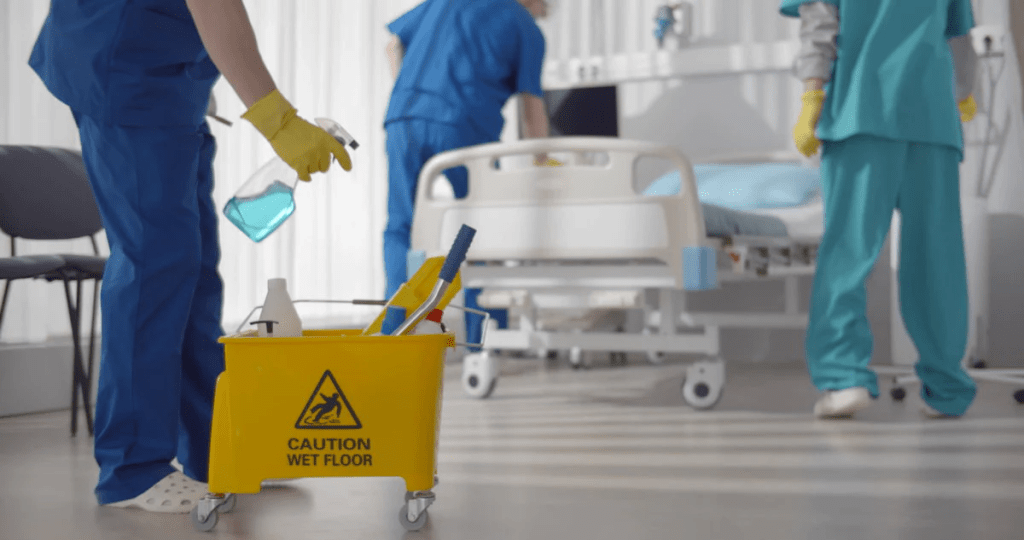
Therefore, I’m not sure how you’d be able to ensure that their environment is sufficiently sterilized before surgery or whatever… maybe you can politely ask them to sterilize things, and hope that they at least TRY to fulfill your request? I am not sure. Just don’t make the mistake that I made… do NOT accidentally sit down on a hospital toilet seat without first sterilizing the absolute living FUCK out of it. Use fire if you have to. OK I’m kidding, please don’t use fire… but you get my point!
Pharmacies and Injections
Each Farmatodo pharmacy has a nurse on staff who does injections, but they do NOT inject antibiotics. HABIB Pharmacy has no such restrictions, but the staff has no human empathy (though, if you’re white and/or female, I believe you’ll have a better experience).

If you get a combination of injectable painkillers and antibiotics for intramuscular injection, be sure to tell them to inject the painkiller FIRST, then wait 5 minutes before injecting the antibiotic. Or just take some painkiller pills 15 minutes before the antibiotic injection. Either way, this will help “take the edge off” the inevitable pain.
Final Thoughts
I am glad I got this surgery done “early”. Overall, the private healthcare system in Colombia is very good, the SURA Seguros mobile app is a delight, the facilities are very nice, the OVERALL system is great… but the lower-level (non-physician) WORKERS, their attention to detail (or lack thereof), and their training (or implementation) are sometimes lacking. This should come as no surprise: as usual, in any complex system, the weakest link is almost always the human beings.
Honestly, if the USA hadn’t failed its residents in terms of healthcare, I’d have flown back there for this surgery. I am confident that I’d have NOT gotten that Staph infection! But hey… as of the day I published this article, I seem to have made a full recovery, and I am already back in the gym trying to recover my 2 months of lost muscle mass. Despite the unexpected difficulties and expenses, I thank the Universe that things worked out OK 👍🏽
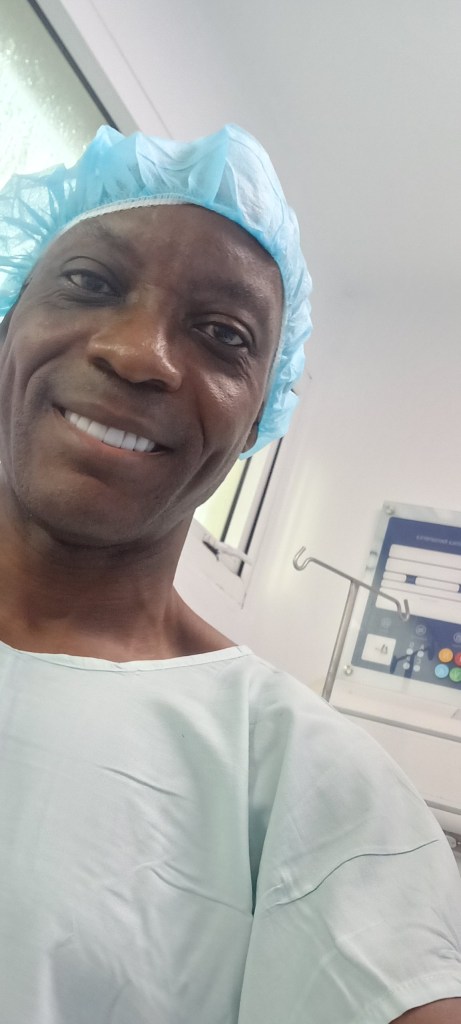
Let’s see what happens when I get my hemorrhoid surgery in early 2026! 😲🤭😅
 Opara's Journey
[…] I was diagnosed with a minor umbilical hernia, and had to have a minor surgery, followed by at least a month of recovery. It’d not have been a good idea to do that in the […]
LikeLike