Update: Are you interested in finding out more about MY personal language-learning journey? Then check out this more recent article.
One thing you’ll notice on the North (Caribbean) Coast of Colombia, is that they speak a markedly different dialect of Spanish. It’s called Costeñol, or sometimes referred to as Carribean Spanish. It’s spoken very quickly, with lots of dropped syllables, especially middle and ending “s” sounds. This can be very confusing and anxiety-inducing for non-native speakers, especially those who are still at A2/B1 Level (like me).
When I first lived here in Barranquilla, I kept wondering why the fuck they were confidently and even aggressively using incorrect grammar 🤔 For example, greeting people with “Bueno día”, addressing a group of people with “Cómo está”, starting a question with, “Sabe que…”, or naming a restaurant “Pescao” 🤷🏾♂️ Then I found this guide to regional accents of Colombia.
It’s not only the chopped-off syllables. Even when you DO understand the words, they use a lot of regional – and often vulgar – slang, expressions, or “repurposed phrases” that might or might not be properly translated. I’ve heard some of the more educated locals refer to it as “trash Spanish spoken by low-income and low-class Colombians” 🤷🏾♂️ (hey THEY said it, not me!)
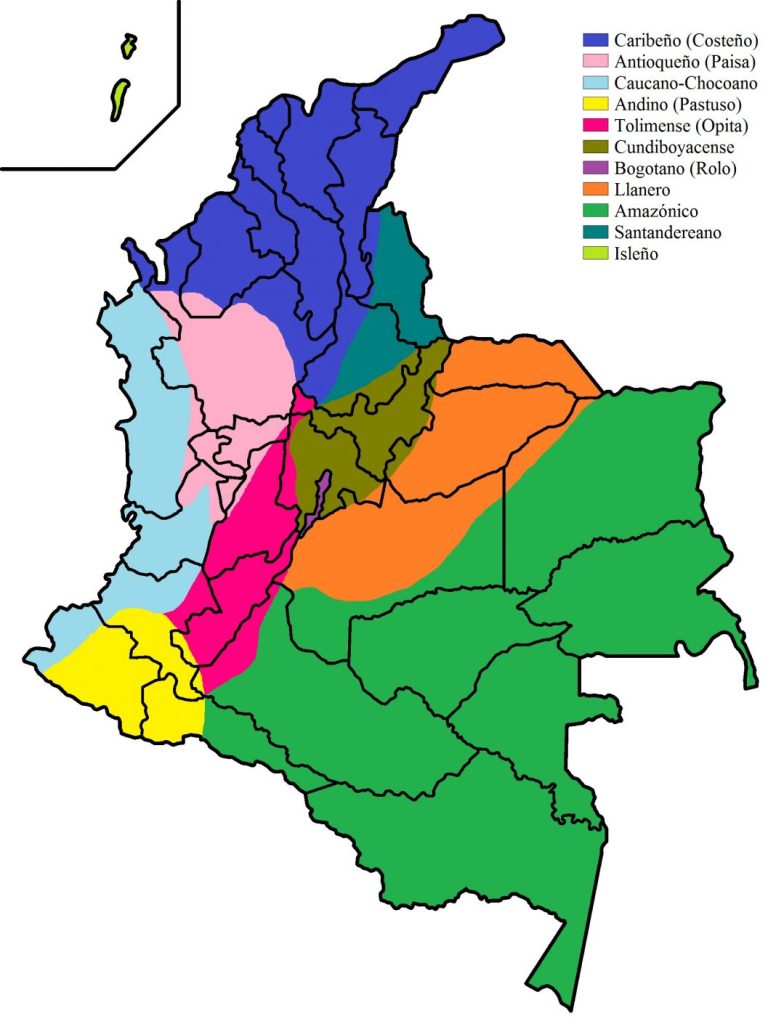
Point is, as a Spanish Language Learner, expect your Costeñol Listening Comprehension to be less than 30%… but don’t feel too bad about it, because even native Colombians from the interior often have a hard time understanding Costeñol! 😂
In fact, let me tell you a story.
My apartment in San Vicente had a semi-minor shower drain issue. The owner sent a plumber, who did the cleaning, and charged me the agreed-upon price. I had the money in my hand, ready to pay him. He knew zero English, at that time my Spanish comprehension was still quite low, and my bilingual assistant and friend “Nita” was not available. So, the worker and I relied heavily on the translator apps. After he explained what he did, he kept ending with “cancelar”. In my mind, that meant “Cancel the service” 🤔 I was extremely baffled, especially since the translator apps – ALL THREE OF THEM – also said “Cancel”. I kept asking him why the service is being cancelled, does he not want to get paid? He responded with the affirmative but kept using “cancelar”.

Eventually, in frustration, I called the landlord and explained the situation. She spoke with him for a moment, and he gave me back my phone to talk to her… she said I just have to pay the guy the agreed-upon amount, and he’ll be on his way. So, I did just that, as I had been wanting to do this whole time. I was still a bit baffled, but didn’t drag the conversation on anymore… I figured maybe there was some service agreement or whatever between the landlord and the plumber.
After the plumber left, I did some digging, and talked with my bilingual friend “Nita”. Guess what I found out??? Instead of the standard “Pagar”, the plumber had been using the less-common alternative version of “Cancelar” meaning “To Pay All Debt” 😮
I ended up texting the plumber and apologizing for the miscommunication and delay, and he took it graciously.
Well… lesson learned! Literally!
Learning Spanish
Speaking of lessons… If you’re like me, you’re most likely learning Spanish by yourself a lot of the time, using one or more language-learning apps like the insanely popular Duolingo or the more full-featured SpanishDictionary.com. Most of them touch upon 3 of the 7 broad dialects (Castilian Spanish, Latin American Spanish, Mexican Spanish)… but these learning tools are largely focused on “Standard” Spanish, more or less “neutral” accent, which one finds more commonly in and around the capital city of Bogota. If you plan to live in that area, you can eventually communicate with the locals using the Spanish you’re learning, even if you’re learning mostly by studying in isolation.
However, on the north coast, you’ll HAVE to rely heavily on Full Immersion and “mimicking” the locals, because like I said, Costeñol is a whole different beast, and is not covered by Duolingo or other language-learning apps! That being said, my personal Spanish language-learning journey is focused on more “comprehensible” dialects.
I hope this new knowledge helps YOU too, on your Spanish Language Learning journey, as well as communicating with native Spanish speakers in Colombia and other Spanish-speaking countries!
 Opara's Journey
[…] is a follow up to an older article, which talked about the different variations of Colombian Spanish, with special emphasis on the […]
LikeLike
[…] including educated people – speak Dominican Spanish, which is basically like freakin’ Costeñol, but even faster and with a whole different set of local expressions and vocabulary that […]
LikeLike